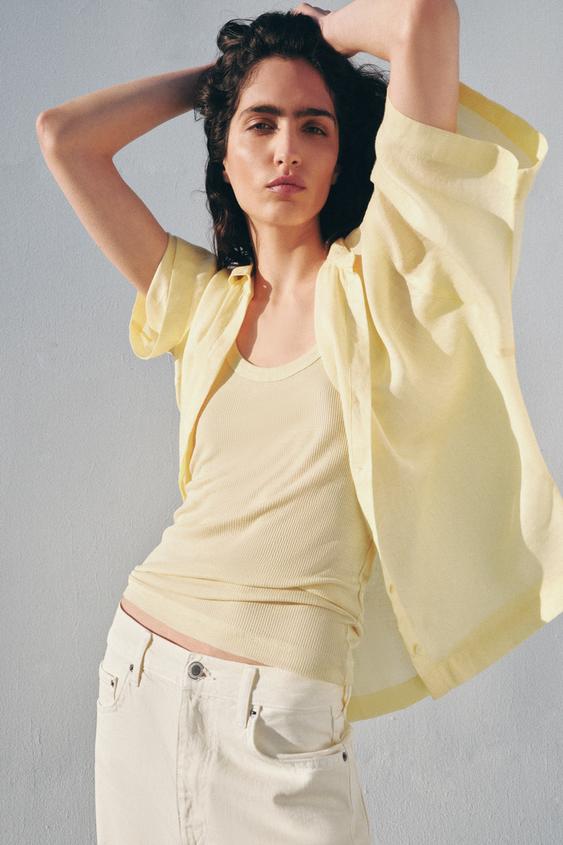
Safe to wear, but flimsy build.
↳ Safe basics, but expect to replace it sooner.
Why this material grade?
This product scored 42/100 on the 7-axis material rubric, based on its composition of 52% Lyocell, 48% Ramie.
D (40-54): Below-average material composition — weak on durability or comfort.
Below average — consider alternatives
This fabric scores low on quality. It may pill, wear out quickly, or not feel great against skin. Look for higher-rated options.
Breakdown
Network
Care Guide
Decode symbols →Wash
cold (30°C)
Bleach
Do not bleach
Dry
line dry
Iron
low
Dry Clean
avoid
Better Alternatives
Higher-rated shirts products — each card shows how much better this alt scores vs your current product.

Kathmandu
Women's K-Merino 250 Long Sleeve Top - Beech
100% Merino Wool

Kathmandu
Women's K-Merino 250 Quarter Zip Top - Black Stingray
100% Merino Wool

Mons Royale
MP Heavyweight Merino T-Shirt - Purple Bolt | Women's T-Shirt
100% Merino Wool

Mons Royale
MP Heavyweight Merino T-Shirt - Black | Women's T-Shirt
100% Merino Wool
Tradeoffs
Health Impact
Microplastic shedding · skin-contact synthetic load · likely chemical treatments
Low health impact — predominantly natural fibers with no major treatment flags.
Minimal
0% synthetic
No flags
What this score doesn't measure
- ×Fiber grade. Staple length, micronaire, strength. "100% cotton" could be short-staple upland or long-staple Pima — same label, very different fabric.
- ×Yarn processing. Singles count, ply (single vs two-ply), spinning method (open-end vs ring-spun vs compact), mercerization. Invisible from any label.
- ×Knit / weave structure. Single jersey vs interlock, knit tightness. A loose knit pills; a tight knit lasts.
- ×Fabric weight (GSM). One construction signal among several — and high GSM can come from loose cheap yarn just as easily as from fine tight yarn. We have it for blank manufacturers, rarely for retail.
- ×Pre-shrink processing. Sanforized cotton shrinks ~1%; non-sanforized can shrink up to 10%. Not visible from the composition tag.
- ×Construction quality. Stitch density (SPI), seam types, collar geometry, manufacturing tolerances (AQL). These often matter more than the fiber itself.
- ×Specific chemical loads. Health Impact flags "likely PFAS / possible formaldehyde" from composition × category — we don't lab-test individual SKUs.
We rate the fabric, not the garment. Composition is the floor of what you're guaranteed to be getting — most shoppers don't have that.
Action