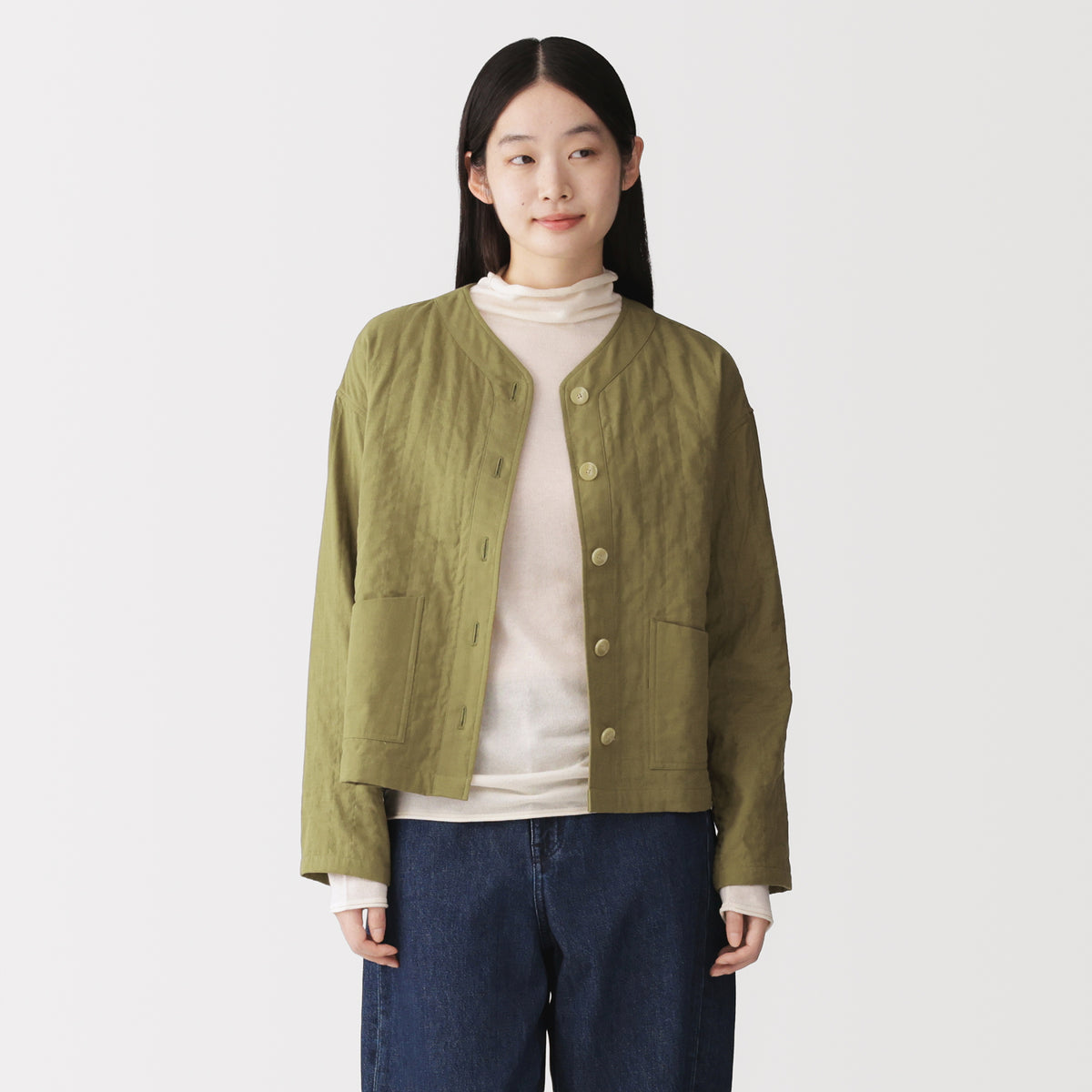
Safe to wear, but flimsy build.
↳ Safe basics, but expect to replace it sooner.
Why this material grade?
This product scored 58/100 on the 7-axis material rubric, based on its composition of 78% Organic Cotton, 22% Kapok.
C (55-69): Average material composition — typical blend, reasonable for everyday wear.
Everyday quality
This fabric does the job for daily wear. Not premium, not bad — it's the middle of the road. Follow care instructions carefully to extend its life.
Breakdown
Cotton biodegrades in 1-5 months. When you're done with this, it returns to the earth — not the ocean.
Cotton absorbs moisture but doesn't wick it. Great for a hot day, terrible for hiking — you'll stay wet.
Network
Cost per wear
rough estimateReasonable cost-per-wear
How we got there
Base for Jackets: 200 expected wears.
× 0.70 for Organic Cotton (low-durability fiber, durability 47).
= 140 expected wears. $100 ÷ 140 ≈ 71¢/wear.
Missing GSM — this is a category-level estimate, not garment-specific. Expect ±30% variance.
Real life is messier than a formula: how often you wash, how you wash, whether you wear it inside-out, dry on low — all of it shifts the number. This is the ceiling under reasonable care.
Care Guide
Decode symbols →Wash
warm (40°C)
Bleach
Oxygen only
Dry
tumble medium
Iron
medium
Dry Clean
avoid
Best For
Good comfort (62) and care ease (59) for casual wear
Good sustainability score (64)
Better Alternatives
Higher-rated jackets products — each card shows how much better this alt scores vs your current product.
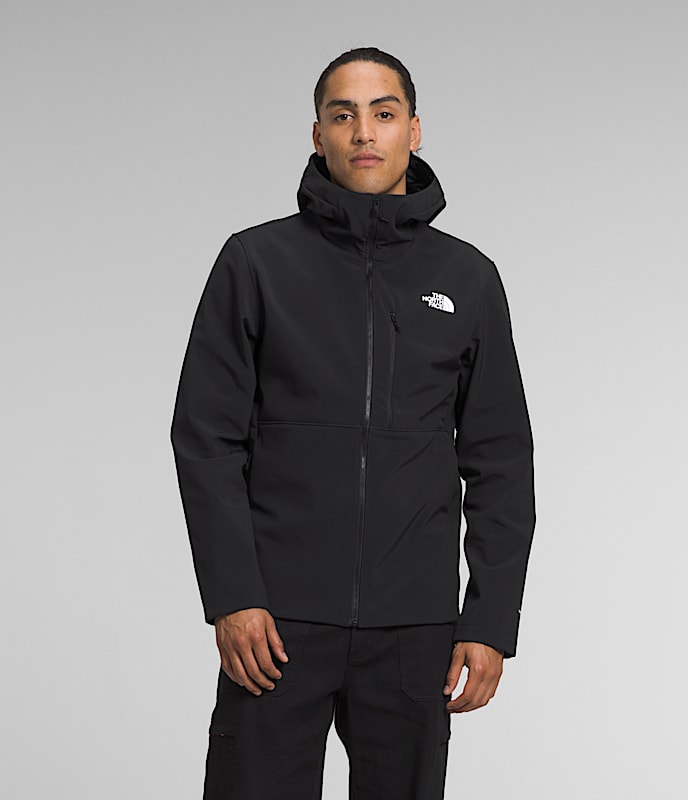
The North Face
Men’s Apex Bionic 3 Hoodie
100% Recycled Polyester

Kith
&Kin Darwin Knit Puffer - Black
100% Merino

Kith
&Kin Darwin Knit Puffer - Canvas
100% Merino
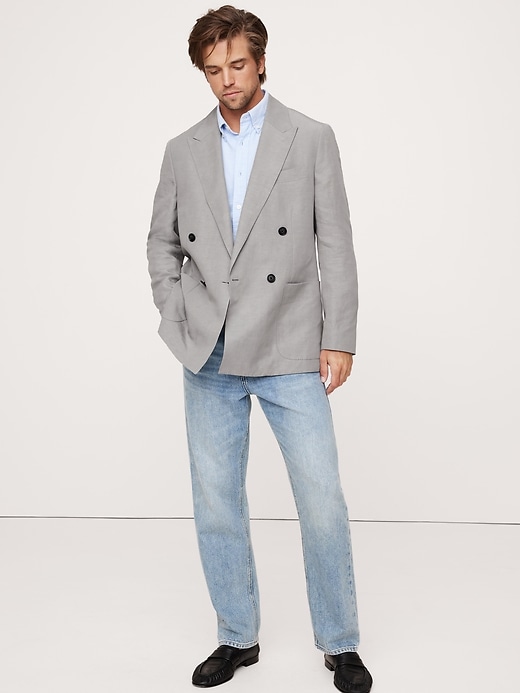
Banana Republic
Relaxed Tencel™-Linen Double-Breasted Suit Jacket
74% Tencel, 26% Linen
Tradeoffs
Health Impact
Microplastic shedding · skin-contact synthetic load · likely chemical treatments
Low health impact — predominantly natural fibers with no major treatment flags.
Minimal
0% synthetic
No flags
Label Confidence
MODERATELabel confidence moderate — one signal suggests the composition may be incomplete or under-verified.
- ⚠Organic cotton claim without explicit certification (GOTS, OCS). Check brand's certification disclosures separately.
What this score doesn't measure
- ×Fiber grade. Staple length, micronaire, strength. "100% cotton" could be short-staple upland or long-staple Pima — same label, very different fabric.
- ×Yarn processing. Singles count, ply (single vs two-ply), spinning method (open-end vs ring-spun vs compact), mercerization. Invisible from any label.
- ×Knit / weave structure. Single jersey vs interlock, knit tightness. A loose knit pills; a tight knit lasts.
- ×Fabric weight (GSM). One construction signal among several — and high GSM can come from loose cheap yarn just as easily as from fine tight yarn. We have it for blank manufacturers, rarely for retail.
- ×Pre-shrink processing. Sanforized cotton shrinks ~1%; non-sanforized can shrink up to 10%. Not visible from the composition tag.
- ×Construction quality. Stitch density (SPI), seam types, collar geometry, manufacturing tolerances (AQL). These often matter more than the fiber itself.
- ×Specific chemical loads. Health Impact flags "likely PFAS / possible formaldehyde" from composition × category — we don't lab-test individual SKUs.
We rate the fabric, not the garment. Composition is the floor of what you're guaranteed to be getting — most shoppers don't have that.
Action